

Lot n° 279
Estimation :
400 - 600
EUR
Register for the sale on drouot.com
Leave absentee bid
Your amount
EUR
Bid by phone
Bid by phone
Your amount
EUR
GRANI. A journal of literature, art, science, and social com - Lot 279
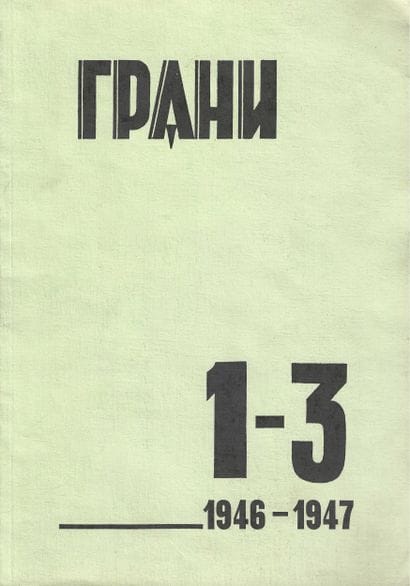
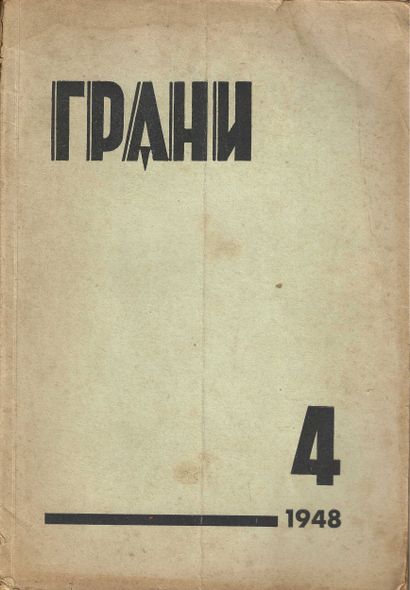
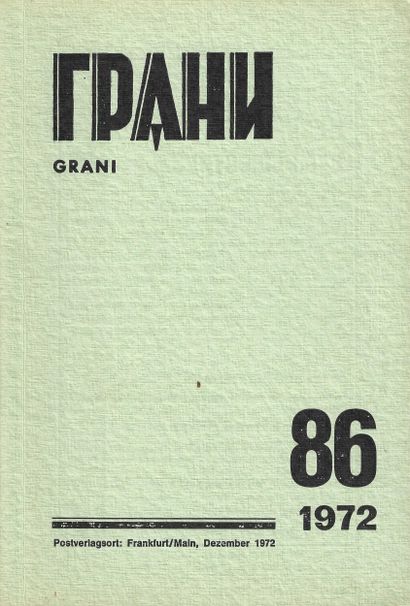
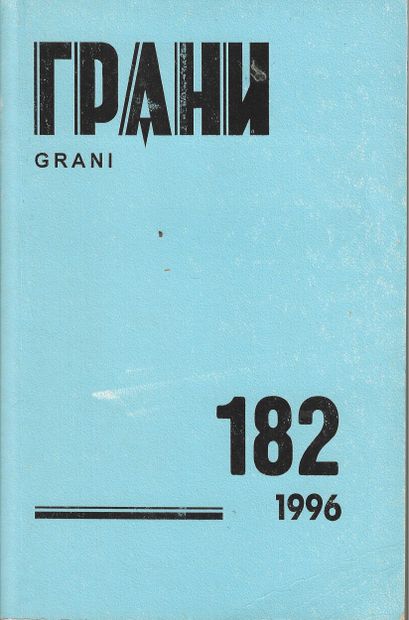
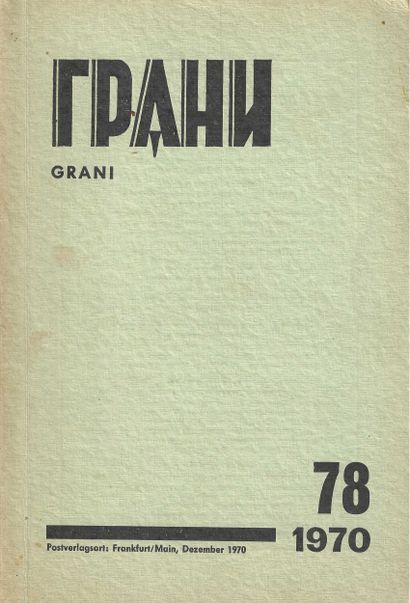
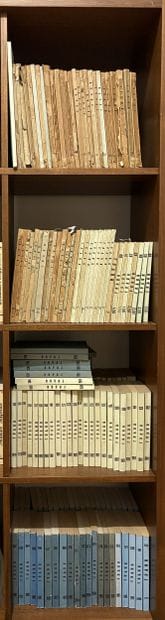
GRANI. A journal of literature, art, science, and social commentary. Complete series of the journal. Founded by E. R. Romanov on July 20, 1946, the journal was published in Frankfurt am Main (Germany). Until 1991, it remained a foreign publication; thereafter, the editorial office moved to Moscow. The collection offered for sale comprises the complete run of the journal “Grani”: all issues, from No. 1 (1946) to No. 182 (1996). In some cases, additional copies of certain issues are available. 182 issues, with 9 duplicate issues covering the same period. Each issue retains its original publisher’s binding by A.B.E. The issues from the 1940s and 1950s are in their original condition.
Historically, “Grani” began as a journal of the second wave of emigration, linked to the circle of the People’s and Workers’ Union of Russian Solidarists (NTS). However, over time, the journal significantly broadened its scope and established itself as one of the leading centers for independent Russian literature abroad. “Grani” played a special role in publishing works by Soviet authors who were unable to be published in the USSR. The pages of “Grani” featured works by Vasily Grossman, Alexander Solzhenitsyn, Vladimir Voinovich, Vladimir Maximov, the Strugatsky brothers, Varlam Shalamov, Joseph Brodsky, Natalia Gorbanevskaya, Naum Korzhavin, Bulat Okudzhava, Alexander Galich, and many others.
GRANI. A Journal of Literature, Art, Science, and Social Thought. Complete set of the journal.
The journal was founded by E. R. Romanov on July 20, 1946, and was published in Frankfurt am Main. Until 1991, the journal remained an overseas publication; thereafter, the editorial office moved to Moscow. In 1996, issue No. 182—the final issue, bringing the journal’s fifty-year history to a close. In 1992, the circulation of *Grani* was approximately 10,000 copies, but by 1993 it had dropped to 3,000. This collection contains a complete set of *Grani*—all issues from No. 1 (1946) through No. 182 (1996). In some cases, there are additional copies of individual issues.
The collection includes issues from 1946 through 1996.
1946–1947: Nos. 1–3; 1948: No. 4; 1949: Nos. 5, 6/7; 1950: Nos. 8, 9 (2 copies), 10 (2 copies); 1951: Nos. 11, 12, 13; 1952: Nos. 14, 15, 16; 1953: Nos. 17, 18, 19, 20; 1954: Nos. 21, 22 (2 copies), 23; 1955: Nos. 24, 25 (2 copies), 26, 27–28; 1956: Nos. 29, 30, 31, 32 (2 copies); 1957: Nos. 33, 34–35, 36; 1958: No. 37, 38 (2 copies), 39 (2 copies), 40; 1959: No. 41, 42, 43, 44; 1960: Nos. 45, 46, 47, 48; 1961: Nos. 49, 50; 1962: No. 51 (2 copies), 52 (2 copies); 1963: Nos. 53, 54; 1964: Nos. 55, 56; 1965: Nos. 57, 58, 59; 1966: Nos. 60, 61, 62; 1967: Nos. 63, 64, 65, 66; 1968: Nos. 67, 68, 69; 1969: Nos. 70, 71, 72, 73;
1970: Nos. 74, 75, 76, 77, 78; 1971: Nos. 79, 80, 81, 82; 1972: Nos. 83, 84, 85, 86; 1973: Nos. 87–88, 89–90; 1974: Nos. 91, 92–93, 94; 1975: Nos. 95, 96, 97, 98; 1976: Nos. 99, 100, 101, 102; 1977: Nos. 103, 104, 105, 106; 1978: Nos. 107, 108, 109, 110; 1979: Nos. 111–112, 113, 114; 1980: Nos. 115, 116, 117, 118 (2 copies); 1981: Nos. 119, 120, 121, 122; 1982: Nos. 123, 124, 125 (2 copies), 126; 1983: Nos. 127, 128, 129, 130; 1984: No. 131 (2 copies), 132 (2 copies), 133, 134; 1985: No. 135, 136 (2 copies), 137 (2 copies), 138 (2 copies); 1986: No. 139 (2 copies), 140, 141, 142; 1987: Nos. 143, 144 (2 copies), 145, 146; 1988: Nos. 147, 148, 149, 150; 1989: Nos. 151, 152, 153, 154; 1990: Nos. 155, 156, 157, 158; 1991: Nos. 159, 160, 161, 162; 1992: Nos. 163, 164, 165, 166; 1993: Nos. 167, 168, 169, 170; 1994: Nos. 171, 172, 173, 174; 1995: Nos. 175, 176, 177, 178; 1996: Nos. 179, 180, 181, 182.
All issues are bound in a hardcover edition. Issues from the 1940s and 1950s are in varying condition (torn covers, stains).
Historically, *Grani* emerged as a publication of the second wave of emigration, associated with the circle of the NTS (People’s Labor Union of Russian Solidarists). However, over time, the journal significantly expanded its scope and became one of the leading centers of independent Russian literature abroad.
“Grani” played a special role in
My orders
Sale information
Sales conditions
Return to catalogue